
Are expiration dates on food accurate or misleading?
Shelf life dates on food products play a crucial role in food safety and quality assurance. Yet in practice, consumers and businesses often interpret these dates differently. Where “best before” refers to loss of quality, “use by” is about food safety. The difference is significant, but not always clear. In addition, actual shelf life can depend greatly on factors such as temperature control during transportation and storage. This raises the question of whether shelf life dates are accurate, or misleading when chain conditions differ from the assumptions on which they are based.
Customization for your unique challenge
Choose solutions that fully meet your needs. At Coolpack, we’re ready with innovative and reliable products for conditioned transport. Together we will be happy to discuss what works for you. Discover what’s possible. Click below for more information.
Specialist in the market
For conditioned transport
Always a solution
Perfectly tailored to your situation
Fast delivery
Your products safe and fresh
Trusted quality
Known to perform time and again
The distinction between “use by” and “at least shelf life”
There are two fundamental categories in expiration dates.
To be used until (use by):
Targeted for food safety. After this date, consumption may pose health risks.
Best before (best before):
Focused on quality. Products may still be safe, but may lose taste, smell or texture.
The distinction is clear, but in practice the difference is often misinterpreted. Consumers treat both dates as if they indicate safety, leading to waste of still usable food. For businesses, on the other hand, a risk arises when incorrect date choices are made or insufficient justification is given as to which category applies.
Risk-based determination of expiration dates
Within the European Union, it has been established that shelf life dates should be based on a
risk assessment
. This involves the following factors:
- Product properties such as pH, water activity and composition.
- Microbial risks, including growth or inactivation of pathogens.
- Process conditions and packaging selection.
- Expected distribution and storage conditions.
The EFSA decision tree supports producers in making the right choice between “use by” and “best before.” This systematic approach is necessary to justify data not only legally but also practically.
Influence of the cold chain
Shelf life is set based on assumed time-temperature profiles. In reality, there are often deviations in the cold chain, for example due to fluctuations in distribution centers, delays in transportation or inadequate temperature control in retail.
When the temperature is higher than anticipated, microbial growth can accelerate significantly. This means that the actual shelf life is shorter than the indicated date. In this case, the expiration date is actually misleading because it does not take into account real chain performance.
Innovative methods: predictive microbiology and monitoring
To increase the reliability of shelf life dates, companies are using two complementary strategies:
Predictive microbiology
With models such as
ComBase
the growth of microorganisms can be predicted under different conditions. This makes it possible to calculate shelf life dynamically and test it against realistic scenarios.
Time-temperature indicators (TTIs) and data loggers
These systems record or visualize the actual temperature progression of a product. This allows better estimation of the remaining shelf life and allows parties to make decisions based on measured conditions rather than a fixed date alone.
Shelf life data as an integral part of risk management
For supply chain managers and QHSE managers, expiration dates are not a static fact, but part of a broader system. Combining
label information, monitoring and modeling
provides greater accuracy. This shifts the question from “is the date accurate?” to “does the date match actual supply chain conditions?”.
External sources for deepening:
Coolpack’s role in shelf life security
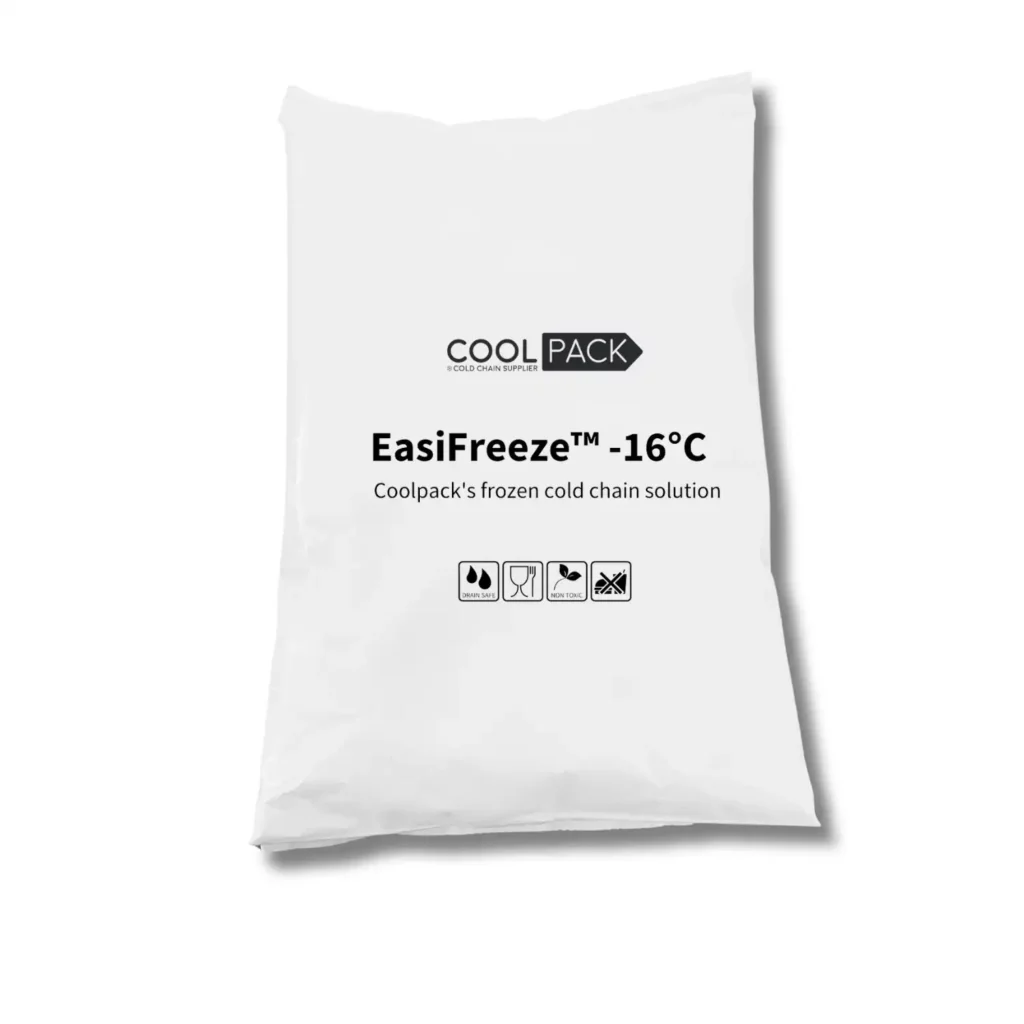
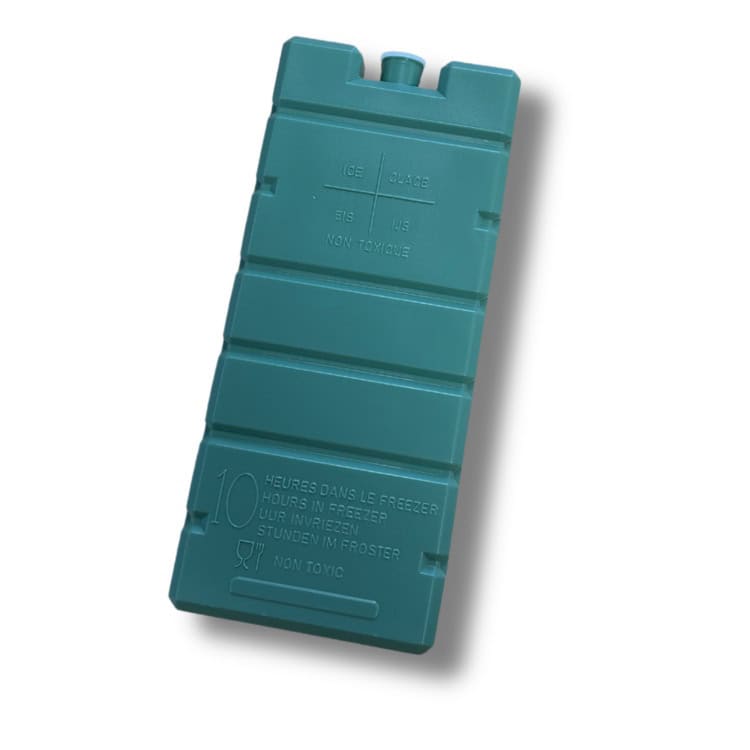
The reliability of shelf life dates hinges on stable temperature conditions. Coolpack supports this with solutions such as PCMs, gel packs and insulating packaging that limit temperature fluctuations. By using reusable and recyclable materials, these systems not only contribute to product safety, but also to sustainable logistics. With assurance through ISO 9001 and ISO 14001, companies can be confident that refrigeration solutions perform consistently. This is how Coolpack helps reduce the gap between theoretical shelf life and actual product conditions.
Sustainability Coolpack and CSR
At Coolpack, we are aware of our responsibility to contribute to society. Both in terms of sustainability and society as a social body.
We weigh the interests of the customer, the environment and society, as well as ourselves as an organization, in all business decisions. In this way, we achieve balanced business operations and together ensure an ever better world.
Product groups
Customer Cases
Contact
- +31 (0)33 457 19 82
- info@coolpack.nl
-
Industrieweg 11b
1566 JN Assendelft
Related blogs


The specifics of pharmaceutical logisticsIn the intricate world of pharmaceutical logistics, maintaining the integrity and efficacy of medication during transport […]
Changing consumer preferences In the European meat and poultry market, a thriving and dynamic industry, consumer preferences are clearly changing, […]