
How e-commerce is changing expectations for food and drug delivery
The rise of e-commerce has dramatically changed food and drug distribution. Where previously wholesalers and physical pharmacies guaranteed temperature control, now millions of orders move through complex last-mile networks to consumers. This places higher demands on packaging, traceability and thermal efficiency. Any deviation in temperature can affect product quality, safety or efficacy. At the same time, pressure is increasing to deliver more sustainably and efficiently within ever-shorter time windows. For logistics professionals, this means that temperature-controlled processes must be redesigned – with attention to validation, material selection and data monitoring. E-commerce makes temperature management no longer a prerequisite, but an integral part of quality assurance in the modern supply chain.
Customization for your unique challenge
Choose solutions that fully meet your needs. At Coolpack, we’re ready with innovative and reliable products for conditioned transport. Together we will be happy to discuss what works for you. Discover what’s possible. Click below for more information.
Specialist in the market
For conditioned transport
Always a solution
Perfectly tailored to your situation
Fast delivery
Your products safe and fresh
Trusted quality
Known to perform time and again
How e-commerce is changing expectations for food and medicine delivery is changing
New standards in temperature-controlled distribution
The growth of e-commerce in the food and pharmaceutical sectors is forcing companies to rethink their logistics processes. Whereas temperature control used to be limited to large-scale distribution centers and refrigerated trucks, it is now a requirement all the way to the consumer’s front door. Orders range from chilled meals to prescription drugs. This has reduced tolerances for temperature fluctuations, and increased the need for continuous validation.
The European Good Distribution Practice (GDP) Directive stipulates that medicines must remain within specified temperature limits during transport. Combined with the e-commerce promise of fast delivery, this creates a tension between speed, safety and compliance. Temperature-controlled packaging must meet not only technical requirements, but also documentation and traceability requirements that are auditable.
Complexity of the last-mile in e-commerce
In traditional chains, logistics is linear: manufacturer, distribution center, retailer. In contrast, e-commerce introduces a fragmented last-mile structure with micro-fulfillment centers, cross-docks and delivery partners. Each additional switching moment increases the risk of temperature drift.
For temperature-sensitive goods, even brief exposure to ambient temperature (e.g., during sorting or delivery) can affect stability. To overcome this, companies are increasingly implementing lane-based thermal risk assessments: route-specific analyses of climate profiles, transport duration and seasonal variations. These then determine the choice of insulation, PCM type and pre-conditioning.
Thermal validation and performance testing
The use of thermally validated packaging is a core requirement within e-commerce distribution. Methods such as Design Qualification (DQ), Operational Qualification (OQ) and Performance Qualification (PQ) are applied to prove that packaging functions within temperature limits.
In addition, testing standards such as ISTA 7D and 7E provide representative temperature profiles that correspond to package networks in the EU. By testing packages according to these profiles, companies can predict how long a product will stay within specification under variable conditions.
The thermal efficiency of a package is determined by the combination of insulation value (R-value), PCM mass and melting point, and the heat load in the transport environment. For pharmaceuticals, the optimum is often around 2-8°C, while chilled food typically requires 0-4°C. The choice of PCM type (e.g., water-based or phase change material with adjusted melting point) affects both performance and environmental impact.
Digitization and traceability
Customers expect not only fast delivery, but also transparency about conditions during transport. EN 12830 describes the requirements for temperature recorders in transport and storage. Modern data loggers measure and record every minute, with automatic upload to a cloud platform.
For logistics professionals, this makes it possible to monitor Estimated Time in Temperature (ETT), detect deviations and document corrective actions.
This digital visibility is increasingly being integrated into e-commerce portals, allowing end users to verify that their shipment was delivered according to specification. This reinforces supply chain responsibility and aligns with quality management systems such as ISO 9001 and ISO 13485.
Combining efficiency and sustainability
The strong growth of parcel flows also brings an environmental issue. Each shipment requires insulation material, PCM and protective packaging. To reduce the carbon footprint, companies are experimenting with mono-materials that are easier to recycle, and reusable packaging concepts.
Yet this must go hand in hand with thermal stability: biobased or recycled materials sometimes have a lower insulation value, which can be compensated for by optimized wall thicknesses or modular use of PCM packs.
A sustainable solution meets three criteria: preservation of product quality, lower material impact and reduction of waste due to temperature excursions. Minimizing product rejection through stable temperature conditions often has greater environmental benefits than just material savings.
Professional implementation in the chain
For organizations making the move to temperature-controlled e-commerce, a structured qualification and control approach is essential.
- Define product categories (e.g. refrigerated, frozen, ambient) and required temperature ranges.
- Select packaging With substantiated thermal performance, tested according to ISTA 7D/7E.
- Secure data logging via EN 12830-qualified recorders at defined measurement intervals.
- Train employees in pre-conditioning, loading time and maximum handling times outside refrigeration.
- Implement monitoring KPIs such as OTIF temperature reporting, excursion ratio and CO₂ per delivery.
By following this system, companies can meet both GDP requirements and the increasing transparency expectations of consumers.
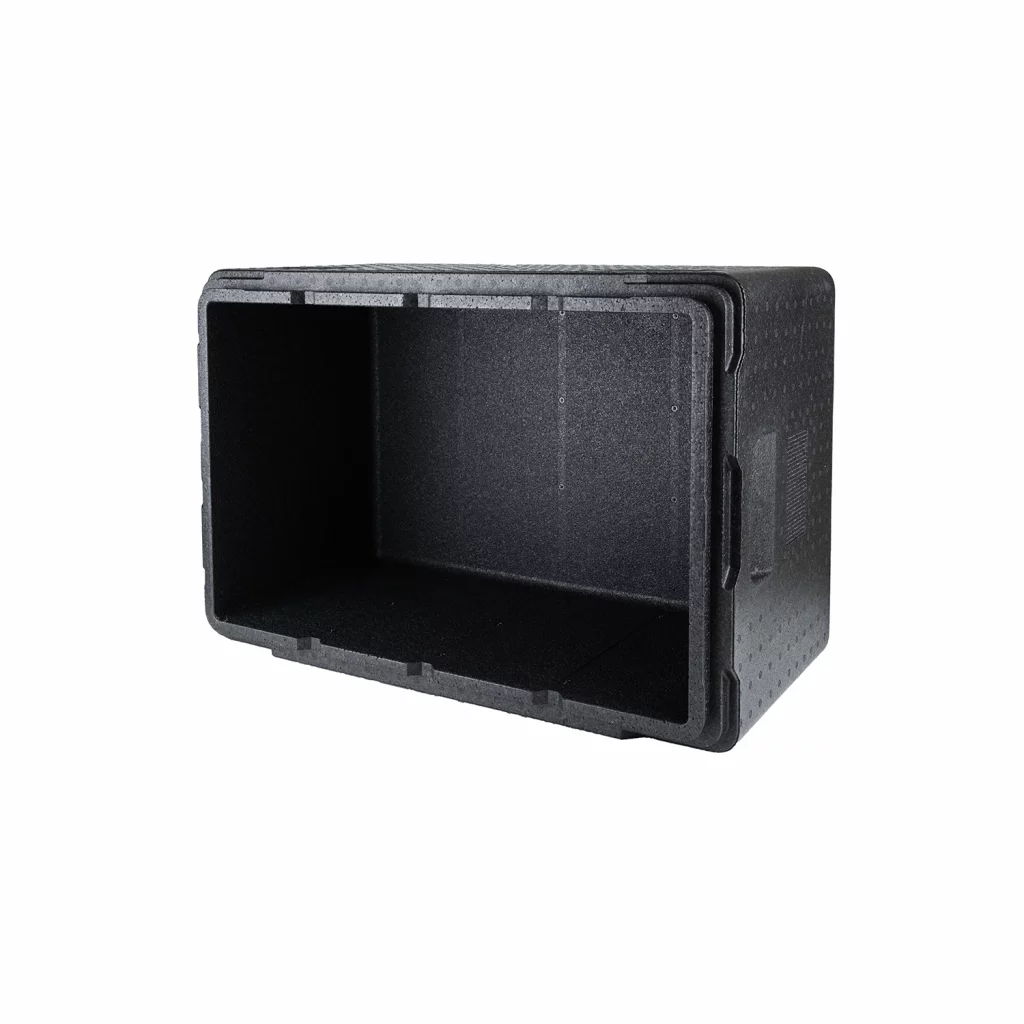

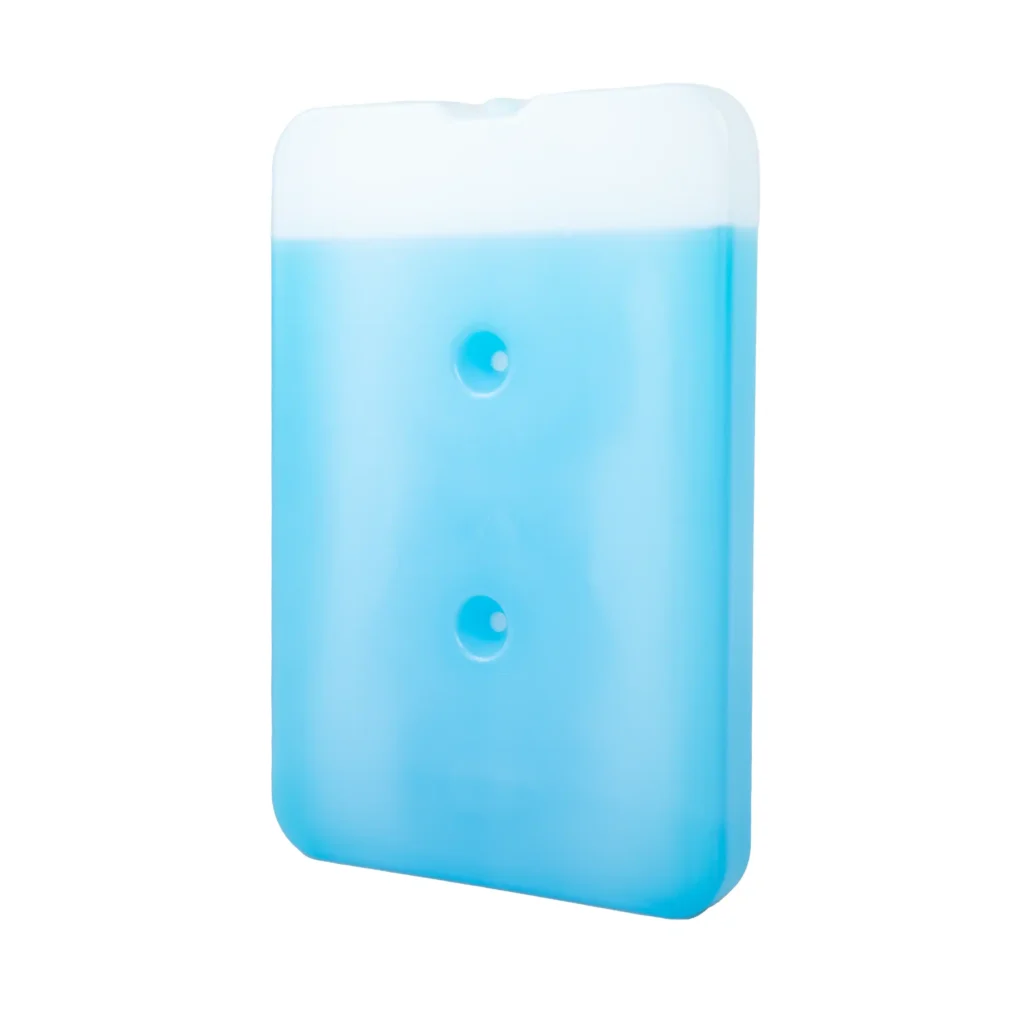
How Coolpack contributes to reliable and sustainable e-commerce distribution
The increasing demands within e-commerce demand thermally reliable, certified and sustainable packaging solutions. Coolpack supports this development with products specifically designed for temperature-controlled logistics in both food and pharmaceuticals. Our Phase Change Materials (PCMs) and cooling elements offer precisely tuned temperature ranges for 2-8 °C, 15-25 °C and frozen applications. When combined with insulating packaging such as EPS and EPP boxes, a validated, reproducible solution is created. Thanks to ISO 9001 and ISO 14001 certified production processes, Coolpack guarantees quality and environmental responsibility. Thus, we provide substantiated means by which organizations can meet the changing expectations of e-commerce distribution safely, efficiently and sustainably.
Sustainability Coolpack and CSR
At Coolpack, we are aware of our responsibility to contribute to society. Both in terms of sustainability and society as a social body.
We weigh the interests of the customer, the environment and society, as well as ourselves as an organization, in all business decisions. In this way, we achieve balanced business operations and together ensure an ever better world.
Product groups
Customer Cases
Contact
- +31 (0)33 457 19 82
- info@coolpack.nl
-
Industrieweg 11b
1566 JN Assendelft
Related blogs


Biodegradable packaging is often presented as a sustainable solution to the growing packaging waste problem. Yet in practice, not every […]
This article originally appeared in the Bunzl Netherlands Sustainability Report 2022. Energy is costly, and we can see just how […]