The biggest challenges in global cold chains for perishable goods
Global cold chains are the backbone of food and medicine logistics. Yet this network is under pressure. Extreme weather, stricter regulations, energy and resource scarcity and growing demand for temperature-sensitive products are increasing complexity. In international routes, infrastructure, control capacity and standards vary widely, leading to risks of temperature excursions and product loss. In addition, there is a growing need for demonstrable compliance with quality and sustainability standards, such as GDP, ISO 14001 and F-gas regulations. Supply-chain professionals are faced with the challenge of balancing performance, compliance and sustainability. As a result, the global cold chain is not only a logistics discipline, but also a technical and regulatory interplay in which thermal efficiency, traceability and process validation are central.
Customization for your unique challenge
Choose solutions that fully meet your needs. At Coolpack, we’re ready with innovative and reliable products for conditioned transport. Together we will be happy to discuss what works for you. Discover what’s possible. Click below for more information.
Specialist in the market
For conditioned transport
Always a solution
Perfectly tailored to your situation
Fast delivery
Your products safe and fresh
Trusted quality
Known to perform time and again
The biggest challenges in global cold chains for perishable goods
Cooling chain structure and critical risk points
The logistics chain for perishable goods – such as fresh food, meat, fish, dairy, flowers and temperature-sensitive pharmaceuticals – encompasses multiple links: from production/harvesting and processing, through storage and transportation, to distribution and delivery to end user. Each link requires temperature-controlled storage or transport, often in a continuous process of pre-cooling, refrigerated transport, warehousing and last-mile distribution.
Moreover, in international flows, variation in infrastructure quality, energy availability, regulatory level and modality (sea, air, road, rail) plays a major role. In many emerging Markets, cold storage or transportation infrastructure is still limited, making exposure to ambient temperatures longer or controls less robust.
With perishable goods, thermal tolerance is often small: even short-term deviations of a few degrees can degrade quality, promote microbial growth or shorten shelf life. The risk of temperature excursions is therefore considerably higher than for ambient goods.
Challenge 1: Infrastructure and variation in global lanes
One of the biggest bottlenecks is infrastructure: refrigerated vehicles, plug-in points, storage facilities and segmented temperature zones are lacking in many international lanes. According to a report by UNEP and FAO, lack of effective refrigeration can result in the loss of 12% of total food production.
Moreover, long international routes often create longer dwell times in transshipment, customs, sorting and local distribution, increasing time out of controlled temperature condition. Inequality in infrastructure increases logistical vulnerability: a good chain in Europe already cannot accommodate a deviation from one route away.
Challenge 2: Thermal validation, traceability and standardization
To ensure service & quality expectations, companies must be able to demonstrate requirements such as temperature compliance, traceability and data quality. Standards such as EN 12830 define requirements for temperature recorders for transport and storage. In a global supply chain, it is crucial that temperature measurements are reproducible and auditable, especially for pharmaceuticals or high-value food products.
In addition, testing and qualification standardization of packages and transport is important. For example, packages must be validated to representative profiles (such as those of ISTA 7E for package networks) to ensure thermal performance under variable environmental conditions.
Challenge 3: Visualization and digitization of visibility
In global flows, visibility – who does what when and under what conditions – has become increasingly important. Real-time sensor data, combination of order and transport data, and monitoring of Estimated Time in Temperature (ETT) are increasingly becoming part of logistics. This is necessary to identify deviations early and implement corrective measures.
However: adoption of digital solutions in cold chains is uneven. Many regions lack standard data exchange, sensor infrastructure or even basic traceability. This limits overall chain performance and makes risk management more difficult.
Challenge 4: Sustainability, energy and material performance
The cold chain is energy intensive. According to UNEP/FAO reports, the food cold chain is responsible for about 4% of global greenhouse gas emissions, due in part to inefficiencies and product losses.
Materials for insulation and packaging, the use of refrigerants with high Global Warming Potential (GWP) and inefficient transportation contribute to environmental pressures. Companies are increasingly faced with sustainability measures in addition to quality and performance requirements. Integrating thermal efficiency with reusability or recyclable monomaterials is therefore a growing focus.
Challenge 5: Supply and demand volatility in perishable goods
Perishable goods are characterized by short shelf lives, seasonal supply, rapidly changing consumer preferences and international trade movements. According to a Maersk article, price increases, changing consumer behavior and higher input costs have led to significant uncertainties in supply and demand.
This volatility requires companies to build flexible chains with buffer capacities, modular packaging concepts and rapid switching of routes or transport modes. With temperature-sensitive flows, this flexibility is especially important, as any delay or detour can directly affect product quality.
Challenge 6: Regulation and compliance across borders
Global flows for perishable goods often cross multiple jurisdictions; each jurisdiction has its own rules for import/export, cold storage, labeling and validation. In pharmaceutical logistics, stricter requirements apply through GDP guidelines. Failure to comply with these rules can lead to customs delays, storage problems or recalls.
Companies must therefore set up process and documentation systems that comply with all relevant jurisdictions, and can often switch operationally between national standards.
Strategies for improvement
- Thermal risk analysis by lane: Map route-specific climate and process conditions, and set protection margins based on season and modality.
- Validated packaging solutions: choose insulation and phase change materials (PCMs) based on test data, qualified according to standard profiles.
- Sensor and data logging infrastructure.: implement recorders compliant with EN 12830, link data to logistics systems for real-time monitoring and alerting.
- Materials and energy efficiency.: Select monomaterials and reusable packaging solutions, and optimize routing and transit times to reduce CO₂ impacts.
- Flexible sourcing and penetration of near-sourcing: shorten chains and build local backup routes to reduce the impact of geopolitical or climate-related disruptions.
- Compliance management: establish documentation and audit processes for temperature-sensitive flows and train personnel in national and international regulations.

How Coolpack contributes to reliable global cold chains
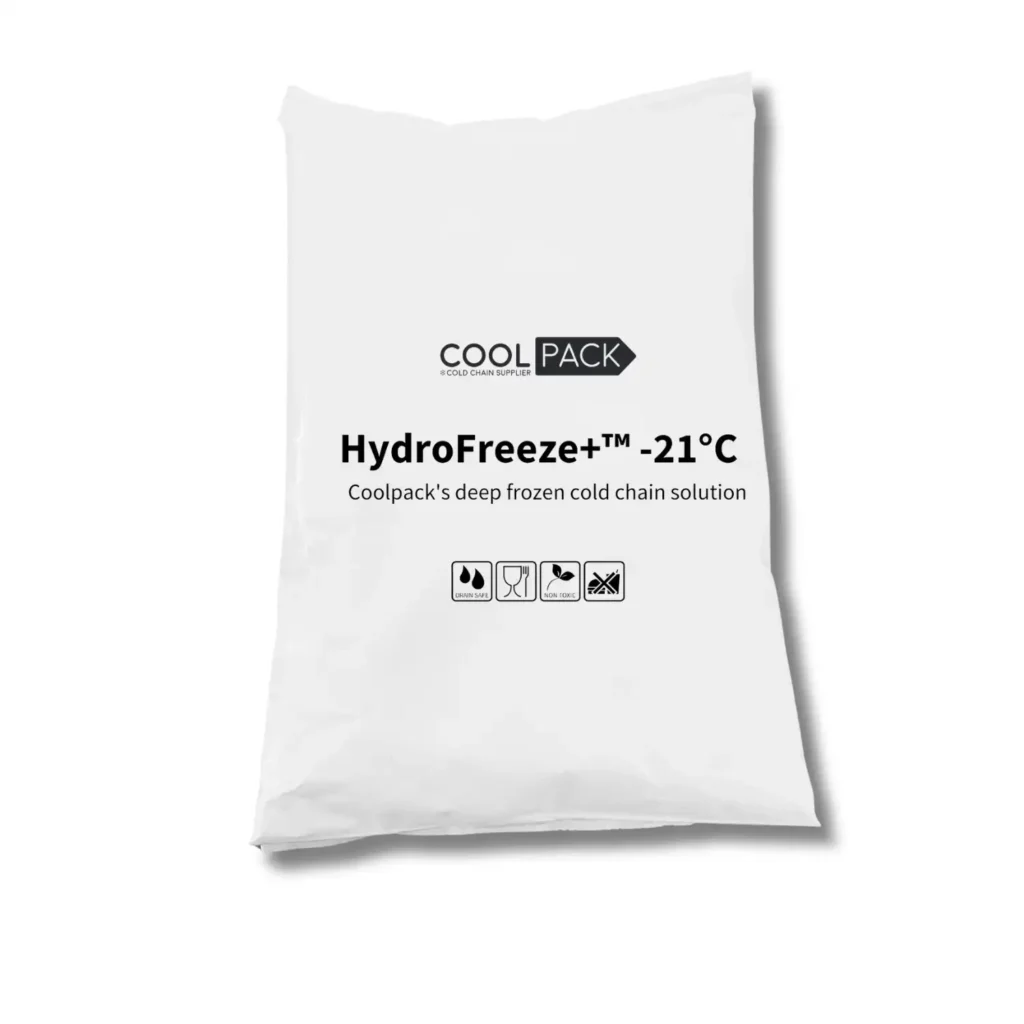
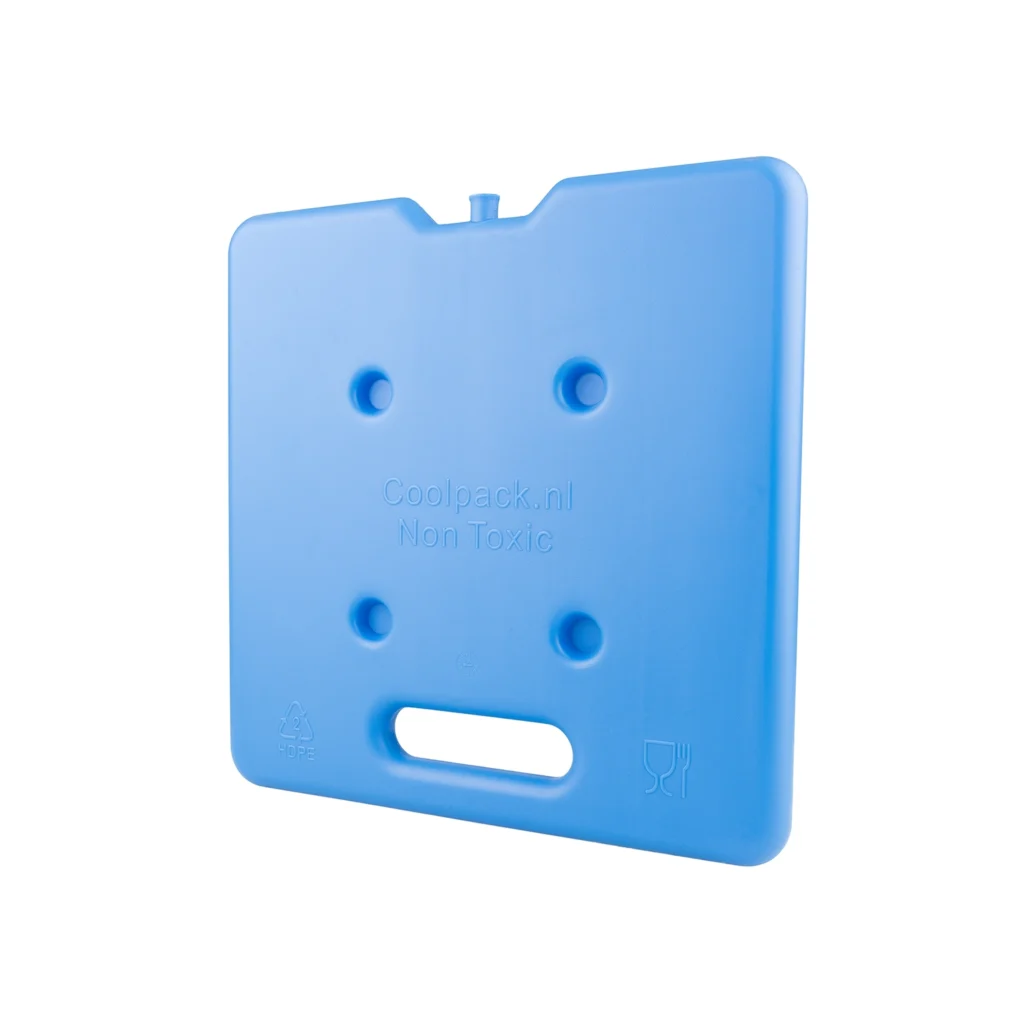
International cold chains demand packaging solutions that combine temperature maintenance, logistical efficiency and sustainability. Coolpack supports these processes with validated refrigeration solutions tailored to various temperature ranges for food and pharmaceuticals. Our Phase Change Materials (PCMs), gel packs and cooling elements deliver stable thermal performance in ranges from +5 °C to -21 °C. By combining with insulating packaging such as EPS, EPP and cardboard monomaterial boxes, thermal efficiency can be tailored to the route profile and desired holding time.
Coolpack operates under ISO 9001 and ISO 14001 certified quality and environmental systems, guaranteeing process assurance and environmental responsibility. Thus, we contribute to temperature-controlled logistics that meet GDP and food safety standards worldwide.
Sustainability Coolpack and CSR
At Coolpack, we are aware of our responsibility to contribute to society. Both in terms of sustainability and society as a social body.
We weigh the interests of the customer, the environment and society, as well as ourselves as an organization, in all business decisions. In this way, we achieve balanced business operations and together ensure an ever better world.
Product groups
Customer Cases
Contact
- +31 (0)33 457 19 82
- info@coolpack.nl
-
Industrieweg 11b
1566 JN Assendelft
Related blogs
Freezing food is an essential part of the modern food chain. Lowering temperatures below freezing virtually halts microbial growth, keeping […]