When one temperature spike is enough to reject an entire pallet
In international AGF exports, everything revolves around temperature control. Products are vulnerable, margins are under pressure and the cold chain must not be interrupted anywhere. Yet it is precisely during transport that the greatest risks arise: short waiting times on the platform, transshipment at logistics hubs or delays in air freight.
For an international AGF exporter, these temperature spikes meant structural losses. Pallets were rejected, claims mounted, and replacement shipments caused extra transport and unnecessary CO₂ emissions. Despite a perfectly regulated cold store, the weakest link remained the transport moment itself.
The question was clear: how do you create temperature stability at times when active cooling is lacking?
The challenge: temperature instability during critical transport moments
The exporter works with products that are sensitive to minimal temperature fluctuations. Within its own facilities, everything remained within the norm. Problems arose mainly during:
- Opening dock doors
- Transshipment at busy logistics hubs
- Waiting times without active cooling
- Air freight delays
This is precisely where traditional refrigeration methods fall short. Refrigerated trucks and cold stores function optimally as long as they remain closed. But during transfer or waiting time, thermal stress occurs, with direct impact on product quality and shelf life.
The company therefore sought a solution that:
- No additional energy consumed
- Easily integrated into existing pallet assembly
- Temperature spikes demonstrably reduced
- Waste and claims reduced
- More temperature stability realizes
Coolpack was involved to make a structural improvement in the cold chain.
 The solution: passive temperature control with Prongo® XL PCM
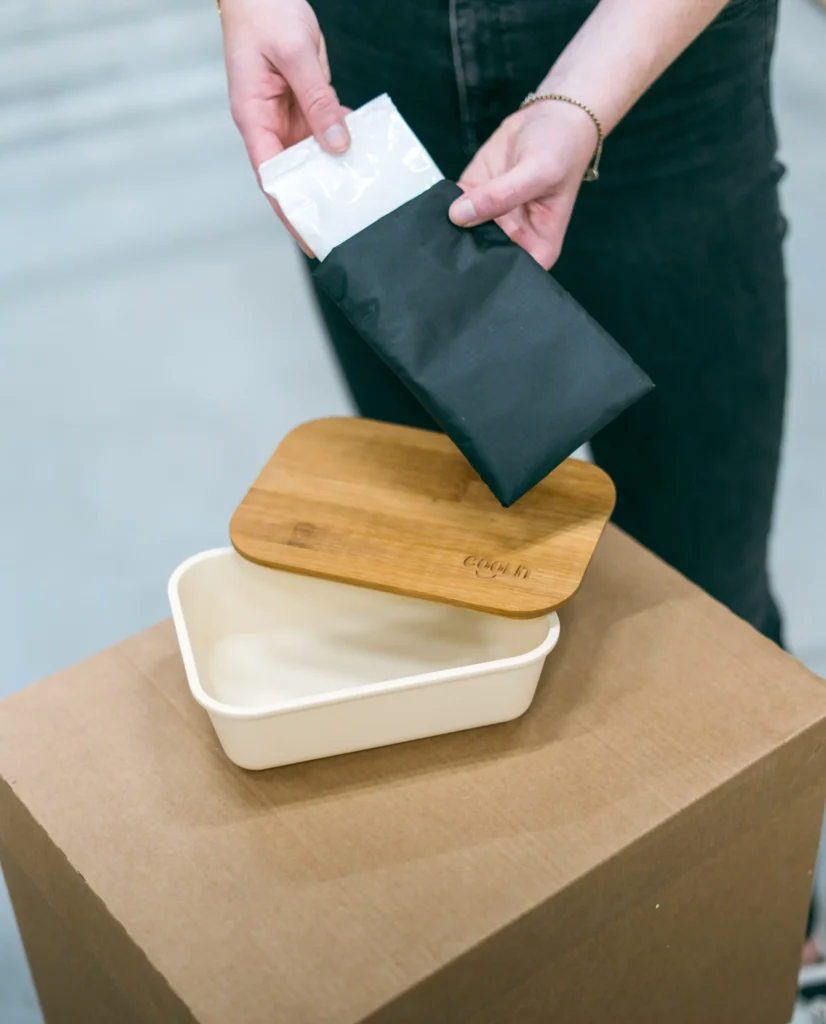
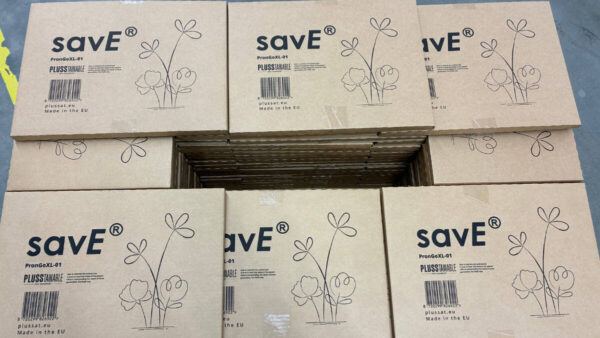
The chosen solution was the deployment of Prongo® XL, a thin PCM cooling cassette that passively supports a stable temperature zone between 2 and 8°C.
PCM (Phase Change Materials) work on the principle of latent heat storage. The material absorbs excess heat as soon as the ambient temperature rises and only releases it when the temperature drops. Thanks to a Phase Change Point of +1°C, the system stabilizes the temperature just above freezing point, preventing products from freezing but protecting them from warming up. Result: thermal buffering without power, without mechanical installations and without adaptation of existing logistics infrastructure.
Prongo® XL is developed by Pluss Advanced Technologies and is available through Coolpack as part of a complete refrigeration solution for temperature-controlled transport.
 Implementation without process change
The implementation proved practical and scalable:
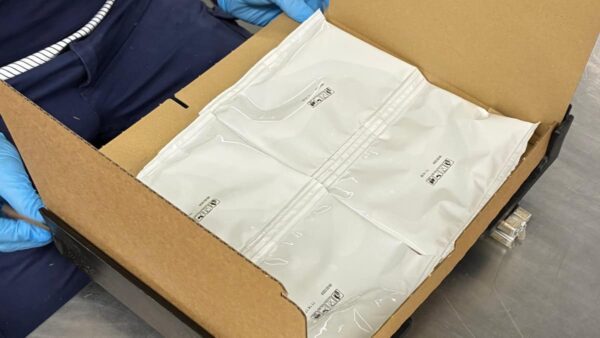
- PCM cassettes were placed between boxes on each pallet
- The pallet was fitted with an insulating cover
- The existing logistics workflow remained fully intact
No investments in new plants or energy facilities were required. The solution was immediately applicable within the existing export process.
Already during the first shipments, one effect was immediately noticeable: temperature peaks during transshipment moments were greatly reduced.
Results: less rejection, more control, lower carbon impact
Clear improvements were seen after the testing phase:
- Pallets arrived demonstrably more stable at temperature
- Rejection due to temperature anomalies decreased
- Emergency shipments declined
- Logistics planning became more predictable
The financial impact was immediate. Fewer claims and fewer replacement shipments meant lower costs and better margins. At the same time, the reduction in rejects led to less product destruction and fewer additional transport movements.
For the exporter, this meant more than just better refrigeration. It meant getting a grip on the most vulnerable moments in the chain.
Why PCM plays a strategic role in modern cold chain logistics
In temperature-controlled transport, the biggest challenge is not in the cold store, but in the transition moments. PCM acts as a thermal buffer exactly where active systems temporarily lack control.
Specifically, this means:
- Stable 2-8°C during transport stress
- Less reliance on continuous active cooling
- Protection of product quality during transshipment and waiting times
- Extension of shelf life on arrival
For AGF, food and pharmaceutical logistics, this offers a scalable way to structurally reduce temperature instability.
From cold chain to clean chain
The deployment of Prongo® XL fit within a broader sustainability ambition of the exporter:
- Less product wastage
- Lower CO₂ emissions.
- More efficient pallet use
- Deployment of circular refrigeration materials
Reducing temperature loss not only protects quality but also makes the overall logistics chain more efficient. That’s the step from cold chain to clean chain: controlled refrigeration with minimal waste.
Want to reduce temperature spikes in your export chain?
Coolpack advises exporters, manufacturers and logistics parties daily on PCM solutions and passive refrigeration technology for temperature-controlled transport. Want to know which configuration is right for your product, pallet assembly or transport duration?
- Receive technical advice from our specialists
- Request a test setup or refrigeration analysis
- Discover our complete range of PCM and cooling solutions
Together, we ensure maximum temperature stability, less waste and a stronger cold chain.