
Gel Packs: the evil twin of water packs – environmental problem!
Refrigerants such as gel packs and water packs are used daily to safely transport temperature-sensitive goods. Although both systems perform the same function, they differ significantly in composition and environmental impact. Gel packs contain polymers or thickeners that are difficult to dispose of in waste streams, while water packs use only water and a plastic shell. This makes the disposal and recycling of waterpacks easier. At the same time, analyses report that the production of gel packs produces higher CO₂ emissions than water packs, partly because of the additional material use. The question therefore arises whether gel packs, despite their wide application, in practice pose a disproportionate environmental problem within temperature-controlled logistics.
Customization for your unique challenge
Choose solutions that fully meet your needs. At Coolpack, we’re ready with innovative and reliable products for conditioned transport. Together we will be happy to discuss what works for you. Discover what’s possible. Click below for more information.
Specialist in the market
For conditioned transport
Always a solution
Perfectly tailored to your situation
Fast delivery
Your products safe and fresh
Trusted quality
Known to perform time and again
Composition and environmental aspects.
Gelpacks
Gel packs consist of a bag of LDPE film filled with a cooling gel. This gel is often produced from polymers or thickeners such as sodium polyacrylate or cellulose. Although the outer film is theoretically recyclable, the gel content poses a problem for waste handlers. Opening and separating the filling is cumbersome, so in many cases gel packs are processed as residual waste. In addition, the gel is not suitable for discharge into the sewer due to risks of clogging and contamination.
Waterpacks
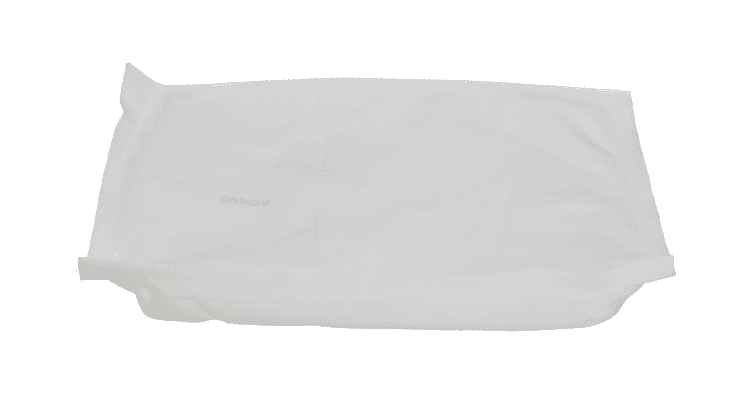
Waterpacks consist of the same LDPE outer layer, but are filled with only UV-treated water. This makes them simpler and safer in waste disposal: the water can be discharged without problems, after which the film can be recycled as a clean mono-material. As a result, the end-of-life score of water packs is generally more favorable than that of gel packs, provided the film is kept clean and collected correctly.
CO₂ emissions and life cycle
Product comparisons show that the production of gel packs requires more energy and material on average than that of water packs. A widely used benchmark indicates that gel packs produce up to about
39% higher CO₂ emissions
caused during production. This difference is related to the additional raw materials and process steps to produce polymers. Waterpacks are simpler in composition and therefore less stressful at this stage.
In the use phase, the performance of both agents is similar: both cool effectively in short-term transport. The difference arises mainly in production and waste disposal. When gel packs are not disposed of properly, the environmental impact increases further.
Recyclability and design
The recyclability of refrigerants depends heavily on the choice of material. LDPE film can be well incorporated into existing recycling streams, provided it is mono-material and the film is not contaminated. With gel packs, this is often a bottleneck because residue is left behind, resulting in the entire pack ending up in residual waste. Waterpacks do not have this disadvantage: after discharging the water, a relatively clean film remains.
For both packages, design choices are important. Less printing, thinner film use and simple seals increase the likelihood of high-quality recycling. Design for recycling is therefore increasingly included in the specification of temperature-controlled packaging.
Performance and use consideration
Although gel packs are often positioned as a more stable cooling medium due to their viscosity, the difference in thermal efficiency is limited in standard applications. In most cases, the
quality of the insulation
(e.g., EPS, EPP boxes or pallet sleeves) more than the choice between gel or water. Thus, in short-term transportation or standard refrigerated shipments, water packs can be used without loss of quality.
Supply chain and QHSE professionals must therefore weigh in on scenarios:
- transport time and desired temperature range,
- risks of leakage or cracking,
- availability of return or collection streams,
- and environmental requirements from customer or legislation.
Strategies for businesses
- Whenever possible, choose
waterpacks
for standard refrigerated shipments. - Use
gel packs
only when additional stability or extended cooling time is demonstrably necessary. - Specify
mono material LDPE
with minimal printing to facilitate recycling. - Lay
waste instructions
Establish for customers and recipients, including safe handling of gel contents. - Document choices in a
life cycle analysis (LCA)
so that environmental impact becomes transparent.
Conclusion
The environmental impact of gel packs is significantly higher than that of water packs, mainly due to polymer production and limited recyclability of residue. For many applications, water packs are an equivalent alternative with a significantly lower environmental profile. Companies looking to reduce their carbon footprint and have circular ambitions would do well to critically review the use of gel packs and replace them where possible.
The role of Coolpack
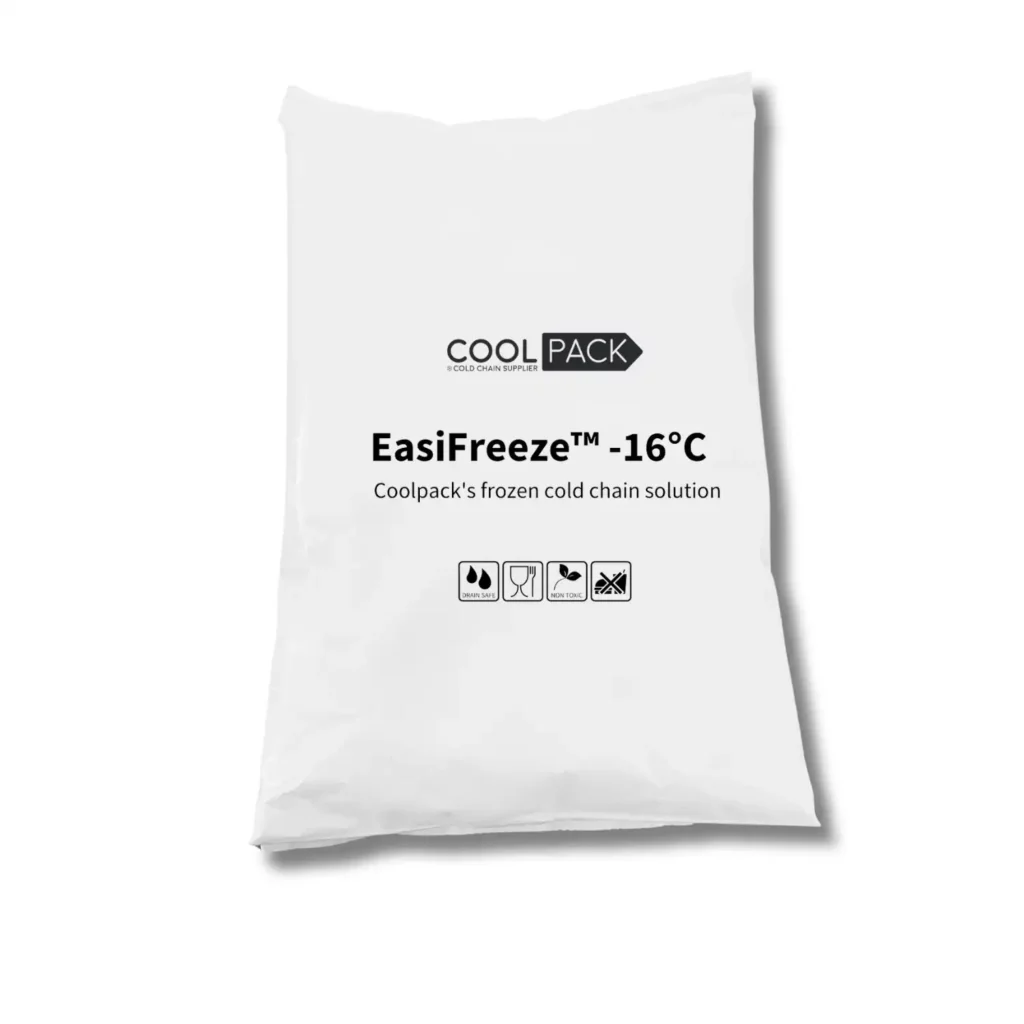
For companies looking to make food or medicine transport sustainable, the choice between gel packs and water packs is relevant. Coolpack supplies both variants and positions water packs as a more environmentally conscious alternative thanks to their simplicity in composition and better recyclability. At the same time, Coolpack also offers reusable options such as cooling elements in HDPE, rHDPE and bio-based materials that fit within circular logistics. With quality assurance via
ISO 9001
and environmental management according to
ISO 14001
organizations can count on reliable and sustainable refrigeration solutions. In doing so, Coolpack helps reduce waste and CO₂ emissions and contribute to temperature-controlled, lower-impact logistics.
Sustainability Coolpack and CSR
At Coolpack, we are aware of our responsibility to contribute to society. Both in terms of sustainability and society as a social body.
We weigh the interests of the customer, the environment and society, as well as ourselves as an organization, in all business decisions. In this way, we achieve balanced business operations and together ensure an ever better world.
Product groups
Customer Cases
Contact
- +31 (0)33 457 19 82
- info@coolpack.nl
-
Industrieweg 11b
1566 JN Assendelft
Related blogs

Freezing food is an essential part of the modern food chain. Lowering temperatures below freezing virtually halts microbial growth, keeping […]
De Ridder BV | Coolpack achieves A Great Place to Work certification! At De Ridder BV | Coolpack, we are […]